The module restores and enhances bank statement reconciliation capabilities in Community editions. It enables easy linking of invoices and transaction details with bank statements functionality that may be missing or limited. By providing structured reconciliation workflows, it aids in detecting discrepancies between bank records and accounting entries. Ideal for businesses looking to automate reconciliation while improving accuracy and reducing manual workload, this module reinforces financial control and audit readiness.
Key Features
Link bank statement lines directly to invoices, payments, or other journal entries for accurate matching
Support multiple reconciliation methods including automatic matching, customer/vendor matching, and manual operations
Create write-off entries or manual journal adjustments in cases of mismatches
Generate statement transactions from payments to facilitate alignment with bank statements
Utilize Excel import capabilities to bring in bank statement data for efficient processing
Assign matching numbers to link journal entries and statement lines, improving traceability
Benefits
Streamline reconciliation workflows by aligning payments and invoices with bank records efficiently
Reduce manual effort and errors by automating key reconciliation steps
Enhance auditability with linked transaction traces and write-off support
Support flexible reconciliation methods tailored to diverse financial scenarios
Improve financial accuracy and trust in bookkeeping through controlled matching processes
Bank Statement Reconciliation

"Accurate and Effective Account Reconciliation"
This module offers reconciliation for Community and enables easy linking of your invoices and all transaction details with the bank statements.
Description
A bank reconciliation statement is a summary of banking and business activity that reconciles an entity's bank account with its financial records. The statement outlines the deposits, withdrawals and other activities affecting a bank account for a specific period.
☛ To do this, you need to find the corresponding invoices and compare the amounts and partners' details with those in the bank statement, which can be a tedious task and a time-consuming process. Luckily, you can easily match your invoices or any other payment transaction with your bank statements. Unfortunately, this feature has been removed from the version.
For this reason, Openinside developed and offered its specially designed “Bank Statement Reconciliation” module as a solution which extends the functionality of the Accounting module and helps the user to match the cash/bank balances on the balance sheet to the corresponding amount on your bank statement. In addition, it determines the differences between the General Ledger and Bank Statement in order to make changes to the accounting records, resolve any discrepancies, and identify fraudulent transactions.
Menu
Accounting
Bank Statements
Reports
Standard module report.
Key Features
Streamlined reconciliation process.
Support for different reconciliation methods.
Fully integrated with other applications.
Ability to create write-offs or manual journal entries.
Ability to register transactions with different criteria.
Improving the quality and accuracy of financial data.
Ability to create statement transactions from payments.
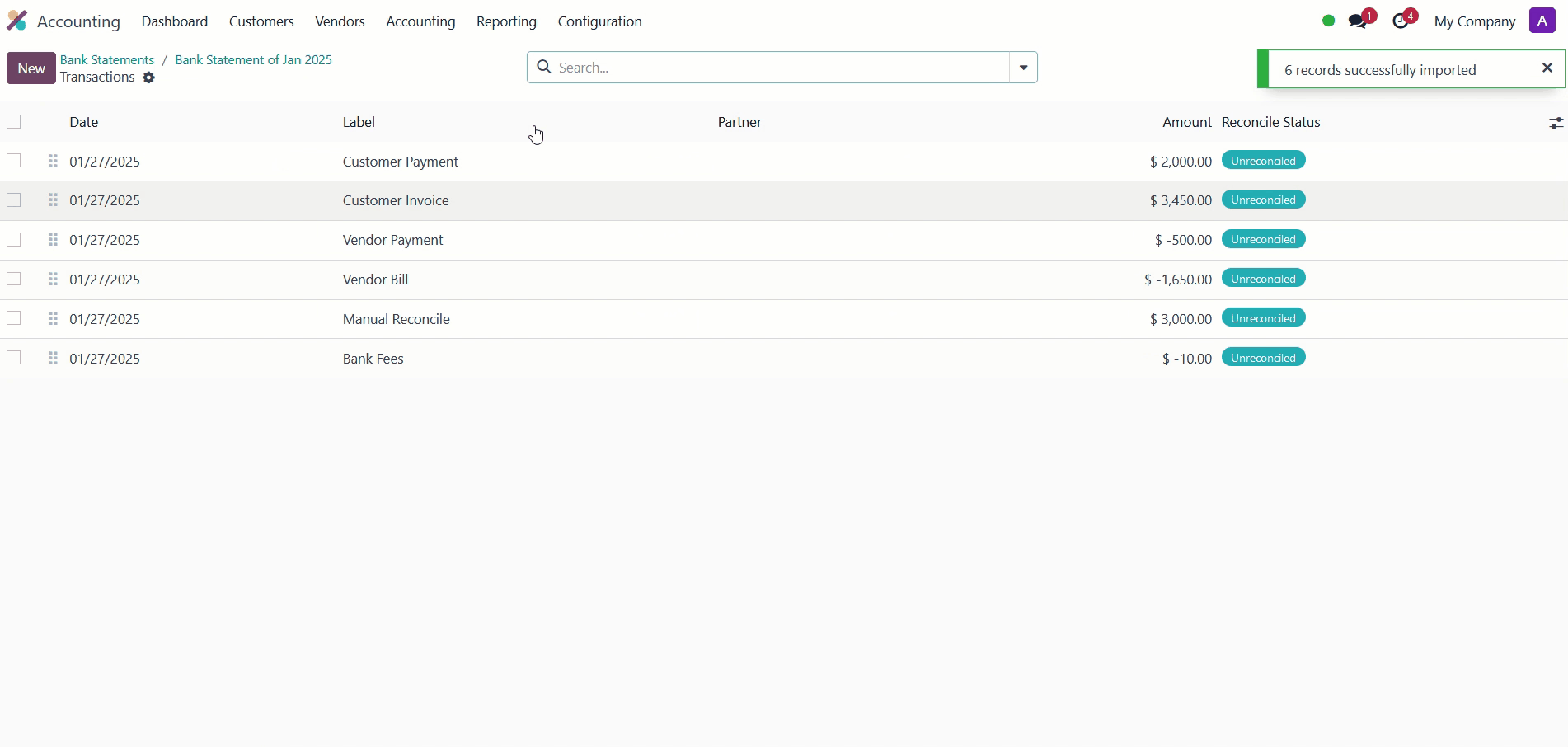
Ability to import statement transactions from Excel (Default import feature).
Links journal entries and bank statement lines by creating shared matching numbers.
Ability to reconcile transactions using payment matching, customer/vendor matching, or manual operations.
Demonstration
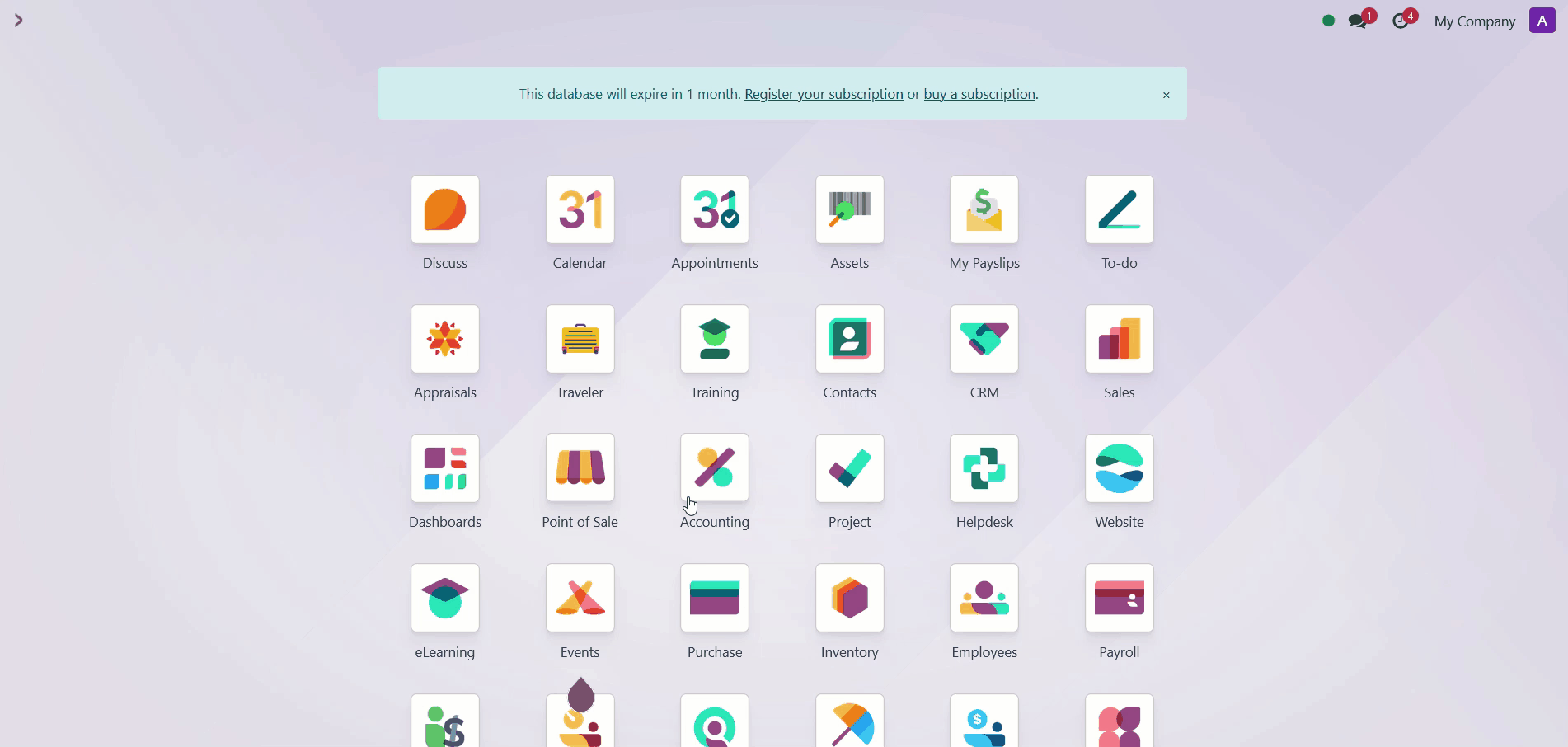
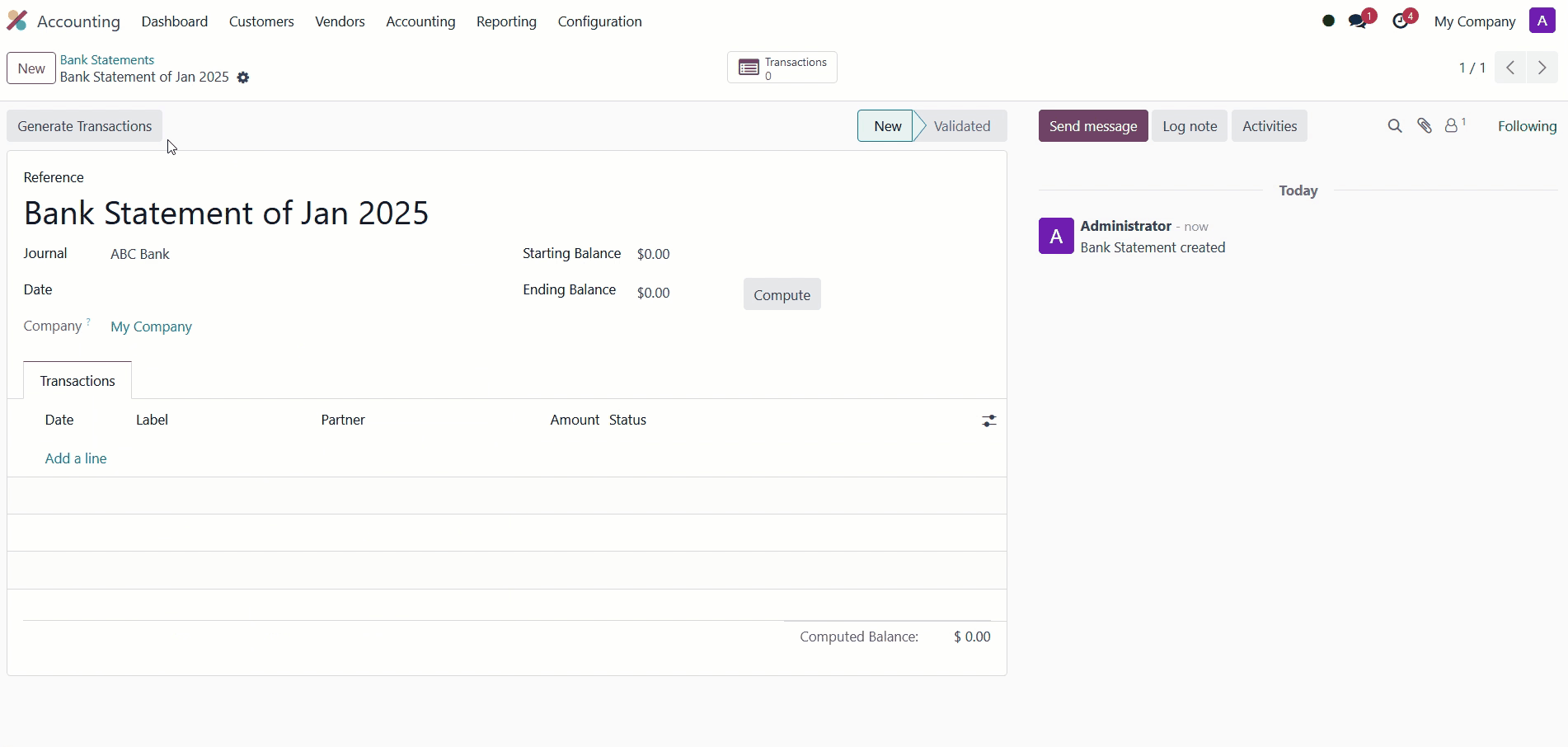
Creating a Bank Statement
Import statement transactions from Excel (Default import feature)
Reconcile transaction with Payment Matching, Customer/Vendor Matching or Manual Operations